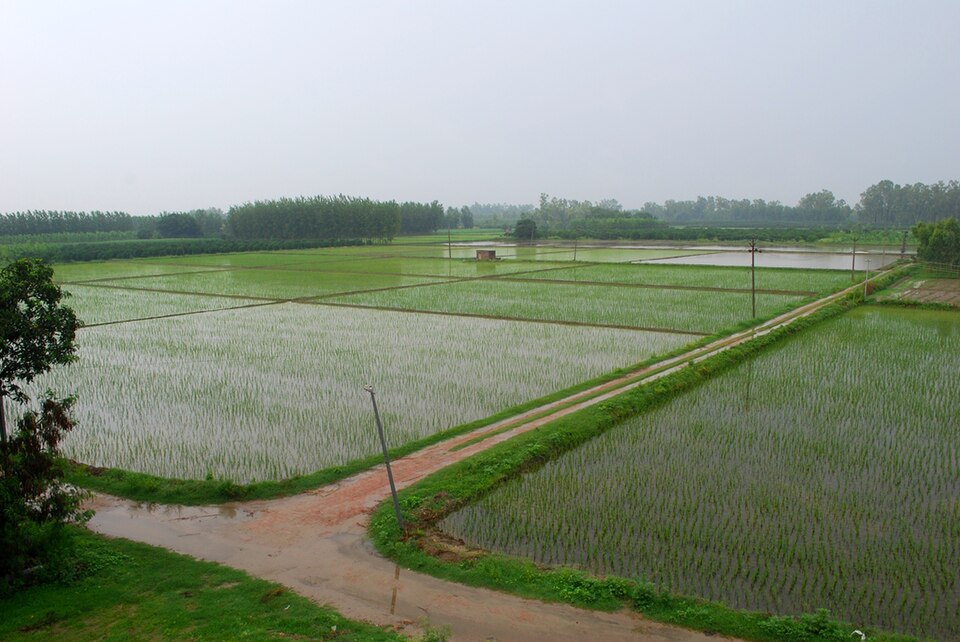
India's Green Revolution: A Paradigm Shift with Enduring Legacies
The mid-20th century marked a pivotal period for India, a nation of immense
scale and significance grappling with persistent food scarcity. Fifty-five years ago, the largest democracy in the world embarked on a transformative agricultural journey, famously dubbed the Green Revolution. This ambitious endeavor, characterized by the adoption of high-yielding seed varieties (HYVs), chemical fertilizers, advanced irrigation techniques, and mechanized farm tools, fundamentally reshaped India's agricultural landscape. Its primary goal was to lift the nation from chronic food dependence to self-sufficiency, a critical step in the newly independent country's nation-building process. While undeniably achieving spectacular successes in boosting food production, the Green Revolution also brought forth a complex tapestry of critiques, particularly concerning its environmental impact, social equity, and the indelible influence of American expertise. Academic discourse remains divided on its ultimate success, prompting a deeper exploration into its multifaceted legacy.
The Genesis of a Revolution: From Scarcity to Self-Reliance
Before the advent of the Green Revolution, India faced a dire food crisis, frequently battling famines and relying heavily on food aid from other nations, notably the United States. This dependency was a significant vulnerability for a young nation striving to assert its sovereignty and feed its burgeoning population. The stage was set for radical intervention.
The conceptual groundwork for the Green Revolution was laid much earlier, notably in Mexico, where American scientist Dr. Norman Borlaug, often hailed as the "father of the Green Revolution," pioneered remarkable advancements in wheat breeding. His innovative "shuttle breeding" technique developed new, disease-resistant wheat varieties that thrived in various climates. By the early 1960s, these robust varieties accounted for 95% of Mexico's wheat production, showcasing their immense potential.
Recognizing the urgent need, India, with collaboration from international organizations like the Rockefeller Foundation and technical guidance from experts like Borlaug, began importing these high-yielding wheat and rice varieties. The Indian government, under dynamic leadership, provided crucial policy support, including subsidies for fertilizers, pesticides, and irrigation infrastructure. The result was a dramatic surge in agricultural output, particularly in states like Punjab, Haryana, and Western Uttar Pradesh, which possessed suitable land and water resources to leverage these new technologies. This strategic investment and adoption of modern agricultural practices were instrumental in mitigating the threat of widespread famine and laying the foundation for India's food security.
Unpacking Success: Food Security and Nation-Building
The most immediate and undeniable success of the Green Revolution in India was its profound impact on food production. Between the mid-1960s and the 1980s, India's grain production more than doubled, transforming it from a food-deficient nation to one capable of feeding its own people and even exporting surplus grains. This achievement was nothing short of miraculous for a country where millions once lived under the constant shadow of starvation.
The shift to food self-sufficiency had far-reaching implications for
India's nation-building process. No longer beholden to foreign powers for sustenance, India gained significant geopolitical leverage and a newfound sense of national pride. It strengthened the government's ability to focus on other developmental agendas, contributing to political stability and reinforcing the young democracy's resolve. The agricultural sector, employing a vast majority of the population, experienced a boost in income for many farmers, reducing rural poverty in some regions and fostering a sense of progress. This period undeniably cemented India's standing as a significant player on the global stage, demonstrating the immense capacity of "Indien Größe" – not just in terms of population and landmass, but in its ability to overcome existential challenges.
The success also spurred the development of agro-industries, cold storage facilities, and improved transportation networks for food distribution, creating new employment opportunities and further integrating rural economies into the national framework.
The Shadow Side: Critiques and Unintended Consequences
Despite its lauded achievements, the Green Revolution was not without its drawbacks, and a growing body of academic literature highlights its significant critiques. The intensive agricultural practices promoted led to a range of environmental problems. Heavy reliance on chemical fertilizers degraded soil health, reducing its natural fertility and leading to nutrient runoff into water bodies, causing eutrophication. The extensive use of pesticides resulted in widespread environmental pollution, harming beneficial insects, birds, and aquatic life, and raising concerns about their impact on human health. Furthermore, the push for increased irrigation, particularly through borewells, led to a severe depletion of groundwater resources in many regions, creating long-term water scarcity challenges.
Societally, the Green Revolution exacerbated existing inequalities. The initial investment required for HYV seeds, fertilizers, pesticides, and irrigation infrastructure was substantial, favoring larger, wealthier farmers who could afford these inputs. Small and marginal farmers often struggled to keep pace, leading to increased debt, landlessness, and a widening gap between the rich and poor in rural areas. Regional disparities also became pronounced, with states like Punjab and Haryana thriving, while others with less access to resources or suitable conditions lagged, creating an imbalance in agricultural development across "Indien Größe".
Was the Green Revolution a Boon for India? A Deeper Look reveals the intricate layers of these socio-economic consequences.
Moreover, the focus on a few staple crops (wheat and rice) led to a significant loss of biodiversity in traditional crop varieties, making the agricultural system more vulnerable to pests and diseases. The economic dependency on external inputs (seeds, fertilizers) also raised questions about farmers' autonomy and long-term sustainability.
American Expertise: A Catalyst with Complex Implications
The involvement of American expertise in India's Green Revolution is a critical aspect often discussed in academic circles. Driven by philanthropic organizations like the Rockefeller Foundation and scientific leadership from figures like Dr. Norman Borlaug, American influence was profound. This involvement can be viewed through the lens of Modernization Theory, which posits that developing nations can achieve progress by adopting technologies, practices, and institutional frameworks from more developed Western countries. The transfer of agricultural technology and knowledge from the US was intended to help India modernize its agrarian sector.
However, this involvement has also drawn critique, particularly from postcolonial perspectives. Academics question whether the transfer of technology also led to a subtle form of dependency or even "neocolonialism," where foreign expertise inadvertently shaped national agricultural policies in ways that benefited certain global interests or created new forms of economic reliance. The very methods promoted – monoculture, chemical inputs, large-scale mechanization – reflected a Western agricultural model that might not have been entirely suitable or sustainable for India's diverse ecological and socio-economic conditions.
The existing gap in literature regarding the nexus between India's nation-building project and the use of American expertise highlights the complexity. While American aid and knowledge were instrumental in solving a pressing national crisis, they also introduced methodologies and mindsets that had long-term implications for India's agricultural trajectory and its sense of self-reliance beyond just food production. The question remains: to what extent did external models truly align with or subtly redirect India's indigenous developmental path?
Navigating the Future: Lessons from India's Green Revolution
India's Green Revolution stands as a powerful testament to human ingenuity and the capacity for rapid transformation in the face of immense challenges. It successfully averted widespread famine and strengthened India's position on the global stage, allowing the nation of "Indien Größe" to develop other sectors. However, its legacy is a complex mix of triumph and tribulation, offering invaluable lessons for contemporary food security and sustainable development efforts.
Moving forward, the focus must shift towards a "Second Green Revolution" or an "Evergreen Revolution" – one that prioritizes sustainability, equity, and resilience. This involves:
- Promoting Sustainable Practices: Encouraging organic farming, precision agriculture, crop rotation, and integrated pest management to restore soil health and reduce chemical dependency.
- Water Conservation: Implementing efficient irrigation techniques like drip and sprinkler irrigation, and investing in rainwater harvesting and watershed management.
- Crop Diversification: Shifting away from monoculture to a wider range of crops, including millets, pulses, and indigenous varieties, to enhance nutritional security and biodiversity.
- Supporting Small Farmers: Providing accessible credit, market linkages, and training for sustainable practices to ensure that the benefits of agricultural growth are widely distributed.
- Investing in Research: Developing climate-resilient crop varieties and smart farming technologies tailored to diverse local conditions.
These actionable steps are crucial for India to address the environmental scars of the past while securing a nutritious and sustainable future for its vast population.
In conclusion, India's Green Revolution was a necessary and monumental undertaking that pulled the nation back from the brink of famine, cementing its path to self-reliance and contributing significantly to its nation-building narrative. Yet, the story is not simply one of unadulterated success. It is a nuanced tale of innovation, unintended consequences, and the complex interplay of international collaboration and national sovereignty. By critically examining its successes and failures, India and the world can learn to forge a more equitable, environmentally sound, and sustainable path for future food security, truly honoring the immense importance and scale of India's agricultural journey.